100.000+ products sold worldwide

Stunt Scooters for Teenagers

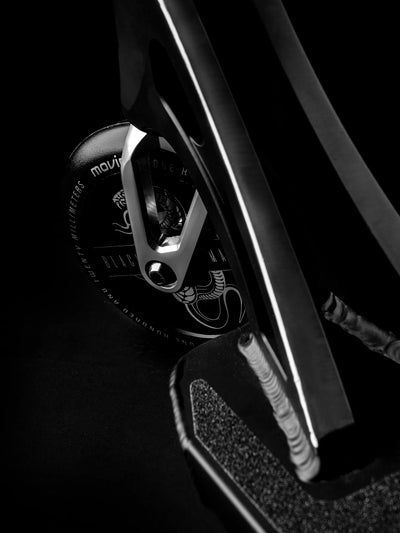


There comes a point when riding is no longer just a way to spend time – it becomes something you want to get better at, something you want to show, repeat and develop. That’s exactly where a well-chosen stunt scooter for teens starts to matter. It’s not about having “a scooter,” but about having one that actually lets you ride the way you see others do it – smoothly, confidently and without limitations. In the Movino range, you’ll find setups built for that stage – where expectations grow and equipment needs to keep up.
Stunt scooters for teenagers – when riding becomes a real passion
For many riders, this is the moment when everything clicks. What started as simple riding turns into something more structured – hours spent at the skatepark, learning tricks, watching others, recording progress and coming back the next day to do it better. That’s exactly why stunt scooters for teenagers have become so popular – they’re no longer just gear, but part of a lifestyle.
You can see it everywhere:
- skateparks filled with riders practicing daily,
- clips shared online showing new tricks and progress,
- growing interest in freestyle riding as a skill, not just a hobby.
It’s also the stage where expectations shift. A regular scooter is no longer enough, because it simply doesn’t allow for progression. Riders want more – more control, more possibilities, more freedom to experiment.
A stunt scooter teenager setup responds to that need. It’s designed to handle repeated attempts, harder landings and more dynamic movement. And most importantly – it allows you to focus on learning instead of adjusting to the limitations of the equipment.
In the Movino lineup, this shift is taken seriously. The goal isn’t just to offer something that works, but something that actually supports consistent practice and visible progress over time.
Stunt scooter for teens – what makes it different from a regular scooter?
The difference is straightforward: a regular scooter is built for moving, a stunt scooter for teens is built for doing more. That “more” includes jumps, rotations, landings and all the small details that come with freestyle riding.
What defines this type of setup:
- fixed, non-folding construction for maximum strength,
- no adjustable handlebars, which improves rigidity,
- reinforced components like deck, fork and bars,
- handlebars rotating 360°, allowing full trick execution.
Each of these elements serves a purpose. Removing folding mechanisms increases durability. Fixed bars reduce weak points. Reinforced parts allow the scooter to handle impact without losing structure.
There’s also a clear difference in geometry. Decks are designed for better control and grip, often covered with griptape that improves foot stability. Handlebars are shaped to match the riding style – wider or more compact, depending on the intended use.
Even though design often draws attention first, it’s not what defines performance. What really matters are the technical aspects – the way each component supports movement and reacts under pressure. That’s why switching to a proper stunt scooter for teenager riders isn’t just an upgrade. It’s a requirement if you want to ride seriously.
Pro scooter for teens – how to choose the right setup for your riding style?
Choosing the right pro scooter for teens is less about following trends and more about understanding how you actually ride. At this level, preferences start to matter – especially when deciding between skatepark and street setups.
What you should consider first:
- deck size and shape – wider and larger for street, lighter and narrower for park,
- handlebar type – T-bar for street, Y-bar for park riding,
- wheel setup – size, hardness and core type affect speed and grip,
- bearing class (ABEC) – higher rating means smoother rolling and better efficiency.
Each of these elements changes how the scooter feels. Smaller wheels improve maneuverability, larger ones increase speed. Softer wheels provide grip, harder ones last longer and allow faster riding.
The same applies to decks and bars. A wider deck offers more stability, while a narrower one makes tricks more dynamic. Handlebar shape affects both control and comfort, especially during rotations.
What’s important is that there’s no single “perfect” setup. The right choice depends on how you ride and what you want to improve. More experienced riders often already know what works best for them, but even at this stage, choosing a setup aligned with your style can noticeably improve control and consistency.
Movino models are built around that idea – not forcing one direction, but giving you a setup that adapts to your riding instead of limiting it.
Movino teen stunt scooter – durability, safety and pro-level performance
When riding becomes more intense, durability stops being a bonus and becomes a requirement. A teen stunt scooter has to handle repeated use, higher loads and more demanding tricks without losing performance. That’s exactly why Movino focuses on material quality, construction strength and long-term reliability.
What you can expect:
- high-quality aluminum construction, reducing weight without sacrificing strength,
- reinforced components built for repeated impact,
- rigorous quality testing, confirmed by recognized certifications,
- consistent performance across different riding conditions.
The idea is simple – create equipment that doesn’t get in your way. A scooter should feel the same not just on the first ride, but after weeks of use. That consistency is what allows real progress, especially when training regularly.
At the same time, safety remains a key part of the experience. Even the best setup needs proper use and protection. That’s why it’s always worth remembering:
- helmet and protective gear are essential,
- equipment should be checked regularly,
- worn parts should be replaced when needed.
Movino combines performance and reliability in a way that supports long-term riding. Whether you’re just stepping into more advanced tricks or already pushing your limits, the setup should match your expectations. Because at this level, it’s not about having a scooter – it’s about having one that lets you keep going further.
Stunt scooters for teenagers and adults – frequently asked questions and answers
Which stunt scooter should I choose for a teenager?
For park riding, choose the ultralight Movino Thor with 110 mm wheels to make aerial tricks easier. For street riding, choose the substantial Movino Kraken with a wide box-cut deck and full-core wheels, ideal for grinding.
How do I choose a stunt scooter for a teenager's height?
Measure from the ground to a point between the teenager's hips and navel, then compare the measurement with the scooter's overall height.
Is there a rider height limit for a stunt scooter?
There is no fixed height limit, but handlebar height is the limiting factor. To maintain correct posture, the bars should reach between the rider's hips and navel.
Which stunt scooter is suitable for an advanced rider?
Choose a scooter with the strongest compression system, a wide deck, large aluminium-core wheels and rigid handlebars.
Which stunt scooter is best for the skatepark?
A lightweight scooter with a peg-cut rear deck, IHC/HIC compression and 110–120 mm wheels makes aerial tricks and fast rotations such as tailwhips easier.
Which stunt scooter should I choose for street riding?
A more substantial scooter with a wide, flat-bottomed box-cut deck, IHC/SCS compression and wide T-bars makes grinding kerbs and rails easier.
Is a lightweight stunt scooter better for tricks?
A lightweight scooter makes aerial tricks and rotations easier to learn, but heavier, more substantial and stronger equipment works better for street riding.
Can an adult stunt scooter have adjustable handlebars?
No. Stunt scooters have one-piece, monolithic handlebars with no height adjustment, preventing them from breaking during landings from height.
How can I tell whether a stunt scooter is too small?
The scooter is too small if the handlebars reach below the hips.